About Daffodil Class:
Daffodil Class is the school’s Local Authority ARP, providing specialist support for children with significant Special Educational Needs (SEN). The provision supports pupils with Education, Health and Care Plans (EHCPs), as well as those who require additional support through a school-based Support Plan.
We provide a nurturing, inclusive, and relationship-centred environment where every child is recognised as an individual with their own unique strengths, interests, and ways of learning. We celebrate and embrace different ways of thinking, learning, and communicating, ensuring every child feels valued, understood, and supported to flourish.
Through personalised learning, specialist interventions, and targeted support, we help children develop their communication, emotional regulation, social understanding, sensory awareness, independence, and learning skills. Support is carefully tailored to each child’s individual profile, ensuring that their needs are understood and that they can access learning in ways that work best for them.
Our experienced team works closely with families and a range of professionals to ensure a collaborative approach that supports each child’s progress, wellbeing, and personal development. Together, we strive to help every child achieve their individual targets, build on their strengths, and flourish in a safe, supportive, and understanding environment.
Admissions:
Daffodil Class does not offer open admissions. Children are considered for a place through an individual assessment process to ensure that the provision is able to meet their needs.
Potential pupils may be identified when enrolling at Alfred Sutton Primary School or through Local Authority referrals when places are available. We review referral information and may visit a child in their current setting to gain a fuller understanding of their strengths and support needs.
If Daffodil Class is considered an appropriate placement, families will be invited to meet the team and visit the provision before progressing through the admissions process. As an Additionally Resourced Provision, we carefully consider each referral to ensure that children receive the right support in the most suitable setting.
If you are considering a Nursery or Reception place and feel your child may benefit from the support offered in Daffodil Class, please contact our SENDCo and Whole School Inclusion Team at ASPS-inclusion@eastreadingfederation.co.uk.
Assessment:
In Daffodil Class, we recognise and celebrate all forms of progress. Assessment is an ongoing process that helps us understand each child’s strengths, interests, and next steps in learning.
Pupils are assessed through a range of evidence, including:
We use a range of assessment frameworks to identify and celebrate small steps of progress. These include the Engagement Model, which supports us in understanding how pupils engage with their learning, and the Transition Framework, which helps track progress across key areas of development. We also draw upon the Early Learning Goals and Development Matters guidance to assess developmental progress and inform next steps.
This holistic approach enables us to build a detailed picture of each child’s learning journey, ensuring that teaching, interventions, and support are carefully tailored to meet their individual needs and aspirations. Our focus is on recognising meaningful progress, promoting independence, and helping every child to flourish at their own pace.
Curriculum:
The Daffodil Class curriculum is designed to provide meaningful, engaging, and personalised learning experiences that meet the diverse needs of our pupils. Learning is carefully planned around termly themes that inspire curiosity, develop key skills, and support children to make progress across all areas of their development. The curriculum includes opportunities to explore literacy, mathematics, communication, personal development, life skills, physical development, creativity, and understanding of the world through practical and experiential learning.
Our curriculum is underpinned by the values of Diversity, Inclusivity, and Aspiration, ensuring that every child feels represented, valued, and supported to achieve their potential.
Recognising that every child learns differently, we provide a highly personalised approach that is responsive to individual strengths, interests, and support needs. Learning opportunities are carefully adapted to help pupils work towards their EHCP outcomes, Support Plan targets, and broader developmental goals. We celebrate progress in all its forms, valuing the small but significant steps that contribute to each child’s learning journey.
Through a nurturing, supportive environment, we aim to develop confident communicators, resilient learners, and increasingly independent individuals. Alongside academic learning, we place a strong emphasis on emotional wellbeing, social development, communication, and life skills, equipping children with the tools they need to flourish both within school and beyond.
The Team:
Sarah Osborne
Inclusion Lead and SENCo
Sarah leads inclusion across the school and oversees the provision within Daffodil Class. She works closely with families, staff, the Local Authority, and external professionals to ensure that children receive the support they need to thrive both academically and emotionally.
Molly Rush
Assistant SENCo
Molly supports the leadership and development of Daffodil Class and oversees the delivery of day-to-day learning, helping to ensure that each child’s individual needs and strengths are at the heart of their educational experience.
Sophie Mooney
SEN Practitioner
Sophie delivers personalised teaching and specialist interventions, creating engaging learning opportunities that support children to achieve their individual goals.
Support staff:
Gemma Gleeson, Iram Imran, Toshiyo Brown, Mariam Rahman
The Space:
Our Indoor Learning Environment Includes:
Our Outdoor Learning Environment Includes:
Our outdoor environment is a secure, private space exclusively for Daffodil Class pupils. As an extension of the classroom, it provides opportunities for active learning, sensory exploration, physical development, and social interaction, helping children to build confidence, independence, and resilience through play and exploration.
Total Communication:


At Daffodil Class, communication is at the heart of everything we do. We use a Total Communication approach, recognising and valuing the many different ways children communicate and interact with the world around them.
We support children to understand, express themselves, make choices, and participate in learning through a range of communication methods, including:
To support communication and understanding, we use Widgit® symbols and software throughout the provision. These visual supports help children access routines, learning activities, social interactions, and key information in a way that is clear, consistent, and meaningful.
By providing multiple ways to communicate, we aim to reduce barriers, encourage independence, and ensure that every child has a voice. Our Total Communication approach helps create an inclusive environment where all forms of communication are respected, understood, and celebrated.
Working in Partnership with Families:

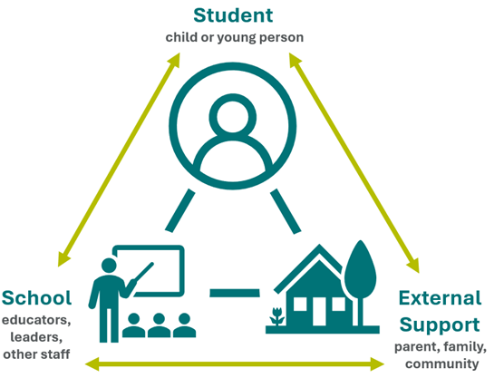
In Daffodil Class, we believe that strong partnerships with parents and carers are key to supporting every child’s learning and wellbeing. We maintain regular communication, sharing updates on children’s progress, achievements, and targets, while encouraging daily conversations with staff to share important information and discuss any immediate needs.
We use Tapestry to celebrate and share children’s learning experiences, giving families an insight into their child’s progress and achievements in school. Parents and carers are encouraged to contribute their own observations from home so that learning can be recognised and celebrated across both environments.
Parents and carers can schedule appointments with our Assistant SENDCo, Molly Rush, to discuss their child’s progress, provision, and individual needs.
We also value family feedback and invite parents and carers to share their views through regular questionnaires, helping us to continually develop and strengthen our provision.
By working together, we can ensure that every child receives the personalised support they need to thrive, both in school and at home.
Information for families:
We are committed to working in partnership with parents and carers to ensure every child receives the support they need to thrive. The following resources provide valuable information, advice and guidance for families of children with Special Educational Needs and Disabilities (SEND).
National Guidance and Information
SEND Code of Practice (0–25 Years) The statutory guidance that explains how children and young people with SEND should be supported in England. This is the key document underpinning all SEND provision. https://www.gov.uk/government/publications/send-code-of-practice-0-to-25
SEND: Guide for Parents and Carers A government guide explaining SEND support, Education, Health and Care Plans (EHCPs), and the roles of schools and local authorities. https://www.gov.uk/children-with-special-educational-needs
Education, Health and Care Plans (EHCPs) Information about requesting an EHC needs assessment, EHCP processes, timescales and appeals. https://www.gov.uk/children-with-special-educational-needs/extra-SEN-help
Independent Advice and Legal Support
IPSEA (Independent Provider of Special Education Advice) Offers free SEND legal guides, template letters, helplines and information about EHCPs, assessments and educational rights. https://www.ipsea.org.uk
SOS!SEN Independent charity providing free advice and support for parents navigating the SEND system, including EHCP applications and appeals. https://sossen.org.uk
Parent Support and Family Advice
Contact A national charity supporting families with disabled children. Provides a helpline, workshops, emotional support, benefits advice and parent resources. https://contact.org.uk
KIDS Provides SEND advice, family support, mediation services and resources to help families understand their rights and access support. https://www.kids.org.uk
Understanding EHCPs
Council for Disabled Children (CDC) Offers practical guidance and examples of high-quality Education, Health and Care Plans, along with resources to help families understand the EHCP process. https://councilfordisabledchildren.org.uk
Local Support
SEND Information, Advice and Support Service (SENDIASS) Every local authority provides a free, impartial SENDIASS service offering information and advice about SEND processes, assessments and support. Search for your local service: SENDIASS
Local Offer Your local authority’s “Local Offer” outlines available education, health and social care services for children and young people with SEND. Reading Directory | Special Educational Needs & Disabilities – Reading’s Local Offer
Condition-Specific Support
National Autistic Society (NAS) The UK’s leading charity for autistic people and their families. Offers practical advice, education guidance, parent training, behaviour support, transition advice and information about autism in schools. https://www.autism.org.uk
Down’s Syndrome Association (DSA) Provides information, resources, training and support for families, professionals and schools supporting children and young people with Down syndrome. https://www.downs-syndrome.org.uk
The ADHD Foundation Resources, training and advice for families supporting children with ADHD and neurodiversity. https://www.adhdfoundation.org.uk
Cerebra A charity supporting children with neurological conditions and their families, including legal guides, sleep advice and practical resources. https://cerebra.org.uk
Parent Advice and SEND Information
Special Needs Jungle A highly respected parent-led website offering straightforward advice on EHCPs, SEND law, inclusion, benefits and education rights. https://www.specialneedsjungle.com
Empowering Little Minds Provides practical resources, visual supports, social stories and advice for supporting children with additional needs at home and school. https://www.empoweringlittleminds.com
BBC Bitesize – SEND and Additional Needs Useful articles and guidance for parents on supporting children’s learning, wellbeing, anxiety and additional needs. https://www.bbc.co.uk/bitesize
Family Fund Provides grants and support for families raising disabled or seriously ill children. https://www.familyfund.org.uk
Communication and Speech & Language Support
Makaton Charity Official Makaton resources, symbols, signs and training opportunities. https://makaton.org
Speech and Language UK Advice and resources for families supporting children with speech, language and communication needs. https://speechandlanguage.org.uk
Emotional Wellbeing and Mental Health
YoungMinds Advice, parent helpline and practical support for children’s emotional wellbeing and mental health. https://www.youngminds.org.uk
Anna Freud National Centre for Children and Families Resources for supporting emotional wellbeing, anxiety and resilience. https://www.annafreud.org
SEND Learning and Educational Resources
Twinkl SEND Resources Printable resources, visual timetables, social stories and SEND-specific learning materials. https://www.twinkl.co.uk/resources/send-inclusion-teaching-resources
Oak National Academy Free online lessons and learning resources suitable for a wide range of learning needs. https://www.thenational.academy